Showing posts with label lacey. Show all posts

No Farms, No Food

Today's post is going to be completely unrelated to writing, just so you know. Randomness will ensue.

I was watching this thing on Planet Green last night, and they were saying that in 2050 the world's population will hit 9 billion people, and there is growing concern over food shortage.

Food shortage!

I grew up around farms. Farmland as far as the eye could see. But now I'm thinking about growing populations, and the human race striving for better technology and higher wages, and blah blah blah ( I'm not the type of person who usually sits around and thinks about this) and it's no wonder food shortage is a possibility! Who wants to be a farmer anymore? Farms are usually family owned, handed down from generation to generation but with the way things are, can a farmer afford to live a comfortable life?

When I was a kid, my family bought milk in glass jugs right from the neighboring dairy farm. Now the FDA is trying to say we can't drink unpasteurized milk (even though more health risks are related to pasteurized than not).

Anyway, I just wanted to give a shout-out to farmers everywhere and say thank you. Without farms, we don't have food. Farmers work from sun-up till sun down, some of them seven days a week. I raise my Elvis coffee mug to you, Mr. Farmer.

Happy Thursday.

Getting Ahead (of yourself).

As aspiring writers, a lot of us tend to make mistakes when it comes to submissions. We don't follow guidelines, we make spelling errors in our queries, or we submit before we're really ready. I'm not saying all of us do these things, you may never make one mistake. But a lot of new writers jump the gun be it with agents, editors, or even contest entries.

You're eager. You know you need to revise more. But it's written all the way to the end. Your BFF says it's perfect. Your mom says you're the next J.K Rowling. Your palms sweat. You're finger is on the button ready to click "send".

Don't do it!


Because chances are, it's not ready. You're not ready. And you don't want to make an a$$ out of yourself by submitting something that isn't ready. If you win the contest, or if the agent requests pages, then what? You send something half-assed and then ask to revise and resubmit. You've wasted said agent/editor's time and you are EXTREMELY lucky if she/he doesn't tell you to go to someplace not nice.

Trust me. Don't do it.

Breathe. Revise. Rewrite. Repeat.

You'll know when it's ready.

Quick Note.

Good morning! I am happy today despite being woken up at 6:45am by jackhammers. Again.
Not a lot to blog about this morning, but I wanted to let everyone know registration for write on con is now open. The conference is totally 100% FREE and open to all MG and YA writers who register. Valerie had a great post with all the into on the conference.

Also, I made it to round 4, the top 10, in the Line-by-line Novel Opening contest over atAdventures in Children's Publishing! There are some seriously awesome first lines over there and I'm honored to be listed among them. Good luck to all who entered!

Shelli, along with literary agent Suzie Townsend of Fine Print Lit, is having a novel pitch contest. The contest is now closed (sorry I didn't post sooner, but I just found out last night) but feel free to hop over to Shelli's blog to read more about Suzie and get a peek at some of the great 140 character pitches!

Happy Thursday!

Rebel Moon: An Anthology of Supernatural Tales


Click the image to grab your copy of REBEL MOON! Includes PARALLEL, a YA supernatural short by me!

REBEL MOON: An Anthology of supernatural tales
by VARIOUS
 
Have you ever wondered what Death would look like if he approached you at a bus stop? Or what would happen if a vampire’s chosen victim turned out to be more than they had bargained for?

Rebel Moon is a collection of stories that will whisk you into worlds of vampires, werewolves and witchcraft so prepare yourself for a bumpy ride as sometimes the dead have more of a life than the living and if this book teaches you anything it is to always expect the unexpected!

From the teen witches you wouldn’t want to cross in One Witch Down to the dark comedy of Evil 101, this is a book you won’t want to put down.

  • Paperback: 220 pages
  • Publisher: Rebel Books LLP (May 30, 2010)
  • ISBN-10: 0956503519
  • ISBN-13: 978-0956503510
  • Product Dimensions: 7.8 x 5 x 0.6 inches
  • Shipping Weight: 7.8 ounces
Can also be purchased from Amazon, WHSmiths, Waterstones and Book Depository.

What to write?

My weekly post at Sisters in Scribe.

I'm working on a new YA novel and I'm doing a few firsts with it. Fun, refreshing, but also a challenge. I'm not big on outlines, but I plan out the basic plot points in a notebook. Right now, I'm struggling to find a good way to get my characters from one point to another and I'm wondering, how do you decide?

**pausing this blog post to make a "red heart-shaped cookie" on a piece of paper for my tiny human**

Do you let your characters choose the path, or do you lay it out for them before they "come to life" on the page? Have you ever found that they just don't want to do what you've laid out?

That's a big part of the adventure of novel writing. You can plan it all out, but your characters are people too, for all intensive purposes, and they have thoughts of their own. You can't force someone to do something that doesn't make sense to them.

Yes, I realize that makes me sound crazy. But we're all a little bit crazy, aren't we? We are, right?

I believe Valerie had a post on characters and the choices they make. So at least I know she's crazy too.

Anywho, this WIP has a bit of a mystery in it and mystery is HARD! Making my characters solve the mystery in a progressive way is a pain in the asterisk right now. The Edgars are tonight and I am cheering for Saundra Mitchell, author of SHADOWED SUMMER! Visit Saundra on twitter @saundramitchelle and cheer for her too!

Rejection: Don't Quit!

***My weekly post at Sisters in Scribe***

Envelope.jpg

Since both of my sisters had inspirational posts this week, I'll try to be inspiring as well. Last night on #yalitchat, we discussed queries and when you're ready, how you handle rejection etc. When being faced with rejection, it can be hard to keep up your spirits and keep pushing onward.

Does every "no" get you closer to a yes? Not necessarily. Every "no" should make you sit back and think, okay, how can I do this better?

Stepping back to rethink your work or maybe just your query is an important part of the writing process. And critique groups are vital! Feedback is a necessity! So don't be afraid to connect with other writers. Don't be afraid to allow another professional to take a look at your query. Even better if they know your book!

I've just recently started working on a query letter for FATED, my YA historical (and I'm not even sure if I should classify it as a historical, that tells you how ready I am to query), and one of my "sisters" made the comment that it is easier for them to tell me what my book is about, than for me to sit and try to figure out what I should put in my query.

But this isn't another post where we yent about the importance of critique partners, this is meant to be inspiring.

So what do you do when you're starring at your first, or your fiftieth rejection letter? Keep on keepin' on! Take a look at your work, your letter, your approach. Research the agents you are querying a little better, make sure your book is the best that it can be! Each rejection letter is an opportunity for improvement, so don't get discouraged. Some editors/agents on #yalitchat noted that they may love a manuscript but reject it because they've bought one similar to it last week, or maybe the higher-ups weren't thrilled about it. It is not a personal rejection. It just means you haven't gotten the right book into the right hands at the right time. You've got to keep trying until you do!

From Mandy Hubbard's blog--A published author is an amateur who didn't quit. Don't quit!

fox-writer.jpg


William Golding's LORD OF THE FLIES was rejected 20 times.


Quote from one publisher’s rejection letter:

…an absurd and uninteresting fantasy which was rubbish and dull.


C.S. Lewis, creator of The Chronicles of Narnia was rejected 800 times before he made his first sale! How is THAT for inspiration!


C.S. Lewis Quotes: courtesy ofInky Girl

What you want is practice, practice, practice. It doesn’t matter what we write (at least this is my view) at our age, so long as we write continually as well as we can. I feel that every time I write a page either of prose or of verse, with real effort, even if it’s thrown into the fire the next minute, I am so much further on.

I am sure that some are born to write as trees are born to bear leaves: for these, writing is a necessary mode of their own development. If the impulse to write survives the hope of success, then one is among these. If not, then the impulse was at best only pardonable vanity, and it will certainly disappear when the hope is withdrawn.


They didn't give up and neither should you.

Magic as a free pass


Kristi and Valerie, my lovely critique partners, both got me thinking with their posts on our shared blog Sisters in Scribe. Kristi mentioned that it is human to act out of character, and Valerie talked about listening to your characters, and recognizing when something is too far out of character.

When you throw magic or paranormal elements into the story, does it change those things? Can your character do things without thinking, or do something totally out of character because magic makes her do it?

Sure.

But how boring is that?

Look at Harry Potter. Sure, he uses his wand to get out of some pretty tight situations, but Harry's wand doesn't just do what he wants it to do. He has to learn how to use it. And he isn't always right and sometimes bad things happen as a result. But Harry learns from his mistakes and come mega showdown, Harry and his wand kick ass.

I'm guilty of doing this myself. Something awesome and scary happens to my MC, and yet she follows an awesome and scary guy into the woods anyway. As of right now, it's because A.) Awesome-scary guy used freaky-deaky powers on her and B.) she's got nowhere else to go.

Nowhere else to go is way more realistic, right? But if you had nowhere else to go, would you still go into the woods with awesome-scary guy? No. But maybe she would. It's up to you/me/the writer to decide. But, like Valerie said, whatever you/me/we decide, it has to make sense. It has to make the reader think "okay, that might be stupid, but I get why she did it."

If I would just have Awesome-scary guy use magic powers on her to make her forget everything and follow him like a drone, that's boring. And it makes me not like the MC because she's kind of pathetic.

Sure, you can just write something magic in there to make her do it. But would you want to read that?

Writing Evil.

I was thinking a lot about the characters in my book and how I portray them. All of them, even the background characters. In other projects the bad guys are not such a concern for me, but when I'm writing FATED, my WWII historical, I need to be a little more cautious. In the first draft, I made the Germans out to be these horrible, horrible monsters. My MC, a Jewish teen girl, saw them with black eyes and jagged teeth. Shadowy gray monsters that hide in plain sight, ready to jump out and snatch everything away from her. And in many ways, this is true to the story. But it also raises a problem for me. I don't want to demonize an entire group of people. Not even Nazi Germany.

So how do you create characters that do these horrible, sadistic, psychotic things without demonizing them? They're demons in your character's eyes, so do you write them as such?

I realize I may be over-thinking this, but it is something that has bothered me for quite some time. I never considered how difficult it would be to write a Historical novel. Writing anything is hard work, but when it comes to something as sensitive and serious as WWII, it becomes a whole different game.

I found this great podcast/interview from the united States Holocaust Memorial Museum website and it really hit home for me. First of all, I LOVE Ralph Fiennes. He is amazing in every film I've seen him in. And one of my favorite films is Schindler's List. I am writing a WWII novel, so I have watched a good number of movies, read books and memoirs and did ample amounts of online research on the time. Makes a very depressing "hobby" by the way.

In this interview, Ralph talks about playing the role of SS officer Amon Goeth in Schindler's List. I will post a link to the full interview as well as the audio, but the one part that really stuck out to me, was Ralph's reply when he was asked what he learned about evil while playing that role.

RALPH FIENNES:
Well, that it’s every day. Evil is cumulative. It happens. People believe that they’ve got to do a job, they’ve got to take on an ideology, that they’ve got a life to lead; they’ve got to survive, a job to do, it’s every day inch by inch, little compromises, little ways of telling yourself this is how you should lead your life and suddenly then these things can happen. I mean, I could make a judgment myself privately, this is a terrible, evil, horrific man. But the job was to portray the man, the human being. There’s a sort of banality, that everydayness, that I think was important. And it was in the screenplay. In fact, one of the first scenes with Oskar Schindler, with Liam Neeson, was a scene where I’m saying “You don’t understand how hard it is, I have to order so many-so many meters of barbed wire and so many fencing posts and I have to get so many people from A to B.” And, you know, he’s sort of letting off steam about the difficulties of the job. And so I suppose you can step back and that is where the evil is, when you can step back and look at it.

I don't want my Nazi soldiers to be static. I don't want them to be purely evil. I want them to be people. But I also want to remain true to the time. I want the reader to see them as my protagonist sees them. I want the reader, to hate them. To fear them. But I don't want the reader to feel as though I have demonized all of Germany because that is not my intention. I think the only way to do that, is what Ralph Fiennes said above: step back and look at it.

In the scene he mentioned where his character is speaking with Liam Neeson's character, he is giving us a glimpse into the mind of Amon Goeth, the man. Not the demon. Another one that comes to mind is a scene from INGLORIOUS BASTERDS (I know, not the best choice for WWII reference). There is a scene when the "basterds" have captured some young German soldiers. They ask one soldier what he plans to do with his uniform when he returns home. The boy says he's going to burn it. This is another look at the "evil" characters as humans. This kid din't want to murder people. He didn't want to be a part of the genocide that came along with that war, but he did it because it was his duty. He became evil inch by inch.

Even for minor characters, I think it is important to know them. To know why they do the things they do. My book is a first person narrative, so my MC may not understand the soldiers. She may still see them with black eyes and jagged teeth, but it is my responsibility as the author to be sure that they are more than that.

Now, if I can just figure out how to do that.

Cover Art!


In 2009, FALLEN by Lauren Kate was released from Delacorte. The cover for the sequel, TORMENT, was just released and it is so awesome, I have to share.

"Boys in books are just better."

***My weekly post at http://sistersinscribe.blogspot.com/ Follow the link for more discussion.***

I saw this on one of those blinky avatar things this morning and it made me chuckle, but then I realized, it's actually true. In most cases. Not mine because my husband totally rocks. Seriously. But I remember my dating/high school years very clearly. Boy were better in books. No offense, guys.

As some of you know, I am a big vampire fan. Always have been long before the Cullen's took the stage. Blame Brad Pitt, because he was one sexy ass vampire, even to an eleven year old girl.
interview-vampire.jpg interview-with-a-vampire image by charlotteofraiz
Yum. I totally envied Kirsten Dunst in this movie.

What makes boys in books so awesome? Depends on what you like. I like danger but not a bad boy. I like them intelligent, chivalrous, and sentimental. Which is why I love vampires. You can have a totally desirable boy, with old world charm who also wants to eat you.

So lets list some of our (my) favorite fictional boys:

Louie - Interview With the Vampire. Obvious reasons.
Eric Northman - Southern Vampire Mysteries. Eric is a bad boy on the outside, but there is so much more to him the farther you read into the series. And, hello? He's a Viking!
Bill Compton- Southern Vampire Mysteries. Bill is a true Southern Gentleman. With fangs.
Sam Winchester-Supernatural. Sam is sweet, smart and strong. And, especially in the latest episodes, he's frigging gorgeous. (Yes, a fictional character can make an actor more attractive. Look at Hugh Laurie as House.) But Sam is also dangerous. If you've seen the show, you know what I mean. If you haven't, you should.
Balthazar- Evernight series. All the reasons I listed above.
Dimitri Belikov-Vampire Academy. His devotion to his duty, and to Rose make him a favorite. And being a big sexy Russian, who is also half vampire helps.

Hmm... 5 vampires and a boy who is addicted to drinking demon blood. Eeek! Thinking of a human...

Dean! - Gilmore Girls. Love Dean, and Dean is a normal boy. We like to see the boy chasing after the girl.
Will - The Luxe.
No real danger will Dean or Will, but they both have the sweet, love-struck boy thing going for them.

I'm going to stop now, because clearly I have a bigger thing for vampires than I thought. In short, I like danger and I like power. But I want it wrapped up in a good-looking package, and tied with a gentlemanly bow. When you finally meet the love interest in my work-in-progress, FATED, you will totally see that. I realize real boys can't compete with a thousand year-old vampire, or a boy who can exercise demons with his mind, but have no fear guys. Just be confident in your self, but humble enough to kiss her butt from time to time.

So who are some of your favorite fictional boys and why?


#yalitchat/teenfire semi-finalists!

Many of you out there in the YA community have probably heard of the Sourcebooks Fire/Yalitchat contest being held at this time. If you haven't, talented YA writer Georgia McBride(founder of #yalitchat)teamed up with the editors of Sourcebooks Fire to bring a unique opportunity to our community.

Georgia sifts through all the entries picking only a handful of them to be sent to the editors at Sourcebooks. The editors will then pick the winners. There is no guarantee for contracts, but just to have your work read by an editor is a great opportunity.

The semi-finalists were announced today! And Kristi and I both entered and we were both on the list! A happy day for the Sisters in Scribe! Because you know we're all about celebrating baby steps. I imagine Kristi has already danced around her kitchen like a "monkey on crack". I haven't had my coffee yet, so that isn't happening. But I did a little wiggle in my chair.

We want to hear about your little accomplishments. What have you done recently to put yourself one step closer to accomplishing your goals? It doesn't have to be a writing goal. Anything we do to better ourselves, even if it's just self-satisfaction, is worth celebrating.

The List of Semi-finalists! from Georgia's Blog.
  1. Kristen Yard
  2. Ethan Marcantel
  3. Gail Zerrade
  4. Lisa M. Basso
  5. Alyssa M. Kirk
  6. Carolyn Grace Matteo
  7. Durga Walker
  8. Courtney Alameda Lowe
  9. Bethany K. Dellinger
  10. K.M. Walton
  11. Christina Lee
  12. Mary Danielson
  13. Kimberly Mitchell
  14. Candace Ganger
  15. Cathy C. Hall
  16. R.C. Lewis
  17. Morgan Baden
  18. Jessie Harrell
  19. P.G.K. Hanson
  20. Laura Perdew
  21. Mark Freeman
  22. Patricia Perez
  23. Eli Ross
  24. Erin Richards
  25. Kristi V. Helvig
  26. Sandi Greene
  27. Nikki Katz
  28. Chris Shanley-Dillman
  29. Lisa Magedler
  30. Joelle McClure
  31. Amitha Jagannath Knight
  32. Tiffany Truitt
  33. Rebecca Lees
  34. Mariah Abotossaway
  35. Steve L. Edwards
  36. Lori Sowell
  37. Lacey Boldyrev
  38. Jordan Elizabeth Mierek
  39. Julie Moffett
  40. Annie McElfresh
  41. Kym Balthazar Fetsko
  42. Pam van Hylckama Vlieg
  43. Elle Strauss
  44. Dean Hardy
  45. Jodie Meadows

Congrats, all and good luck on the next round!

Story ARC

***My weekly post on SIS. For more discussion, visit The Sisters.***

If you're an aspiring writer, no doubt you've heard tell about story ARC and it's importance. Most of you probably understand story ARC, but for those of you still in the dark I'm going to discuss what I know of it. Mainly because I can't think of anything else to discuss with you today. Sad, I know.

What is arc?
Quite simply, it is your story line. The flow of your novel from beginning to end.

What is the purpose of the arc?
To move your story of character forward. To effect change.

Some classic examples of story arc:
The fall from grace. The bitch-queen of high school falls off her throne and mingles among the commoners, only to realize she has a brain and a heart.

The reversal, a character finding strength. The geek girl finally gets accepted by her peers and becomes popular.

**These are really poor, generic examples**

I always think of a line graph when I'm talking about story arc, and I found this great image from musik-therapy.at

story structure

Beginning: Inner conflict- Your character is struggling with something.

Plot point 1: A crisis happens, throwing everything off track and forcing your character to face something she would otherwise avoid.

Middle: The middle is the most difficult for me to write. I want to make everything happen to fast. This is the part that needs the most revising.

This is where the character needs to face a number of obstacles that move her toward her goal. The important thing to remember here, is that you must keep raising the stakes. Minor tragedy, followed by a major tragedy. If something monumental happens first, it lessens the impact of the subsequent event.

Plot point 2: When all hope seems lost, something happens here that changes the direction of the story again, and the character's goals go from being unreachable to achievable. This is the point of the story where the stakes are highest. Danger, Will Robinson! Danger.
Your character will draw upon all she's learned or gained from those climbing crisis' and use that knowledge to overcome this major obstacle.

End: Yay! She did it! Or not.
The end is just that. The end. This is where we see how the character was able to overcome her situation and prevail, or fail miserably. Depends on what you're writing. But hopefully she prevails, because we like happy endings. Or honest ones, at least. The ending is where you need to tie up your loose ends (all or most, depends on the story). This is where the reader sees the change in the character. The fruit of her labor.

Every time I think about endings, I think about THE LUXE series by Anna Godbersen. I absolutely loved this series. And I loved the way it ended, even though not everything was "happy". It ended just as it should have. Each of the characters got what they deserved, whether or not that's what we, the reader, rooted for. The characters change and grow throughout the series and in the end, that growth is obvious:
The naive romantic grows up.
The playboy settles down.
The persistent trouble-maker relents.
Tragedy strikes the sweetheart, but she overcomes.
Every character experiences change in this series and the last book leaves the reader wholly satisfied with all the loose-ends tied into neat little bows.

If your book is the first of a series, obviously not everything will be tied off at the end, but make sure that book can stand alone.
Happy writing!


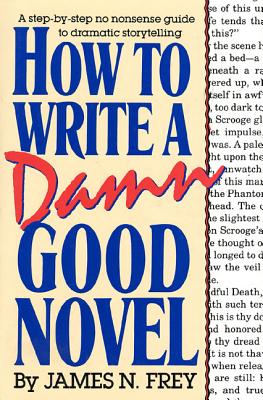
One reference book that helped me was HOW TO WRITE A DAMN GOOD NOVEL by James N. Frey


How to Write a Damn Good Novel

A Step-by-Step No Nonsense Guide to Dramatic Storytelling

By James N. Frey
(St. Martin's Press, Hardcover, 9780312010447, 192pp.)

Publication Date: December 1987

Categories: General, Composition & Creative Writing - Fiction

Buy online from an indie bookstore
Find an indie bookstore near you

Cell-phone books. There's a Novel idea.

**this is my weekly posting at Sisters in Scribe. To join the convo there go to sistersinscribe.blogspot.com**


A friend of mine linked me to an article this morning about a 15 year old girl in Japan, writing under the alias of Bunny, who has sold over 100,000 printed books grossing more than $600,000 that all started on her cell-phone.


Her cell-phone!

She texted 1,000 character segments, uploaded them to publishing website, where the writer can receive instant feedback on her work. Eventually, her cell-phone novel landed her a three book deal for her series Wolf Boy x Natural Girl.

Here is the link to the full LA Times article, if you'd like to know more about Bunny and her novel.

This story reminds me of another author. One I've had the pleasure of chatting up via twitter, and who has stopped by my personal blog on more than one occasion.
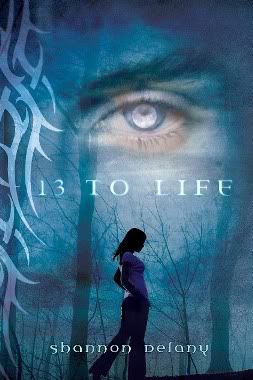
Shannon Delany, author of 13 to Life: A Werewolf's tale (June 22 2010) made her start with a text novel--the first ever in the Western World!


In 2008 I became the winner of the first-ever cellphone novel contest in the western world with my serial novel 13 TO LIFE. I like to believe I brought an American twist to the Japanese cellphone novel concept. My serial novel was a short, consumable read with a rebellious heart and layers of subtext. Unlike typical Asian cellphone novels written by young women in a semi-autobiographical fashion-- 13 TO LIFE is their energetic and dangerous teenage American cousin.

What started as a simple cellphone novel at Textnovel.com grew into a multi-book deal with St. Martin's Press for13 TO LIFE. I've gotten some amazing reviews from bestselling authors and I recognize that I'm truly blessed. Book 1 in the 13 TO LIFE series comes out June 22, 2010 through St. Martin's Griffin.

I invite you to pick up a copy of 13 TO LIFE and see how a simple cellphone novel like the version still posted atTextnovel.com in its rough and ready form grew into a New York City-style series of traditional novels.


It doesn't matter how you got your start or what motivated you to do it. If you believe in yourself, and you want it bad enough, writing a publishable novel isn't out of reach. I realize that sounds very after-school-special of me, but I'm in one of those moods. Deal. *hugs*

13 To Life, June 22nd 2010

How to critique your partner's work.

Thursday is my day to post at Sisters in Scribe and as always, I'm copying my post here :) For farther discussion on this post, hop over to http://sistersinscribe.blogspot.com


This won't be a how-to post, so much as a what-works-for-me post. And what works for me, may not work for you and your partner, but you never know until you try. The reason behind this post, or really the thought behind it, is that I've seen some pretty poor critiques--NOT FROM THE SISTERS, but on random writer websites--and it made me realize that there are a lot of aspiring writers out there, who mean well but don't know how to give honest feedback.

**insert random thought: this popcorn is ah-may-zing**

First things first, and this is a tough one for me, read through the entire manuscript you are given without making edits. Make notes to yourself if you need to, but leave the text alone until you know the outcome. When you know where you'll end up, you can better decide how to get there.

Next, keep in mind that every writer has a unique voice. You may have the desire to totally change the tone of every sentence to fit your vision. But it's not your vision. It's hers, and you need to respect her voice. That doesn't mean you can't help her reword something so it sounds better, or change the structure of a sentence to make it stronger. It just means that Lauren Kate's Luce, is not Lisa McMann's Janie.


Third, be respectful, but be honest. It does not help ANYONE to pussyfoot around sensitive comments. You might not want to tell a random writer that you think "this" sucks, but if she's your BFF, you'd be doing her a service. On that note, if you are the one receiving the crit, you have to be open to suggestions and not take it personally. So, be respectful, but be honest and also be sure to point out the things you like and what you'd like to see more of.

Finally, when doing a thorough critique, it is most helpful to your partner to work line by line, leaving comments on how you think it could be better, what isn't clear to you as a reader, where there is a loop-hole, if something is out of character, a misspelled word etc. When working in MS word, you should have a "Review" tab. Click that and select "track changes". This will show any edits you make in the text. There you will also see "add new comment". To use that feature, highlight the text you want to comment on and click "add a new comment" and type out your comment in the bubble.

In closure, write out an "over all" message. Tell the writer what you loved, what you hated, what you think she can add or leave out. And it's always nice to end on a positive note :)


Do you have any successful critiquing tips to add? We'd love to hear 'em!

Homo Fictus

I post on Thursday over at The Sisters in Scribe. Feel free to read and join this discussion over there!

Characters are the soul of your novel. You can't have a good novel without darn good people to play the parts. I'm no expert on characterization, really no expert on anything, but I read a lot. Any anyone who reads can tell you that fictional characters are a whole lot more interesting than real people.

Nobody wants to read about a plain Jane. Jane needs to be so pretty, the sunset looks like a macaroni sculpture. Or so ugly, a hairless dog is cute. Jane needs to be more cunning, more resourceful, or less if that's how you want her. She needs to love more, hate more fight more.

In The Art of Dramatic Writing by Lajos Egri (1946), Egri describes characters as being three-dimensional. The first dimension being physiological--height, weight, age, race, physical appearance--all these factors will shape the characters life experiences and it is important that you know them all. The second sociological -- what is her social class, what neighborhood does she come from, who were her parents, what's her view on religion, money, sex etc. And third,psychological--temperament, fears, phobias, talents, habits, fantasies and the like.

As writers we often run in to the dreaded "writers block" and many times, it could just be that you don't know your characters well enough. If you don't know them, you can't make them do what you want them to do. Or better yet, you don't know what they want to do in the potentially horrible situation you've stuck them in. And if you haven't stuck them in a potentially horrible situation, you don't have a story.

Your character might be a shy girl, a wallflower with a nose like Tom Cruise, but when she's faced with a dilemma she should woman-up! But whatever she does, it needs to be in character. And at the same time, your characters need to change and grow throughout the course of your novel. Hey, if it was easy everyone would do it.

Think about a memorable character in a book you've read. I'll go with Rose Hathaway from Richelle Mead's Vampire Academy. Rose was more or less abandoned by her mother, a Guardian, and raised by the academy. She has anger issues toward her mom, but she has a strong sense of her duty as a Guardian because of it. She is willing to put Lissa before her because it's what she was taught. It's so ingrained in her, that she can't not do it. Lissa comes first. Period. Rose never even stops to consider why.
Rose falls in love with Dimitri but she knows he is her mentor, and he will also be Lissa's Guardian. If they love each other, Dimitri and Rose both know they'd protect one another over Lissa, and Rose, because of who she is, can't let that happen.
Sure she feels like it isn't fair, and as the series progresses, you'll see Rose pulling away from that mind set little by little, but that is her character changing and growing and still being Rose Hathaway.

So, how do you get to know your Homo Fictus?
There are a number of different approaches. You need to find which one works best for you. Some people, myself included, write out a biography for each main character. It is information that won't be in your book, but stuff you have to know for yourself in order to create a fully fleshed-out pretend person. How to Write a Damn Good Novel by James N. Frey gives some really great examples on this.
Some people, like my lovely friend A.J. Spindle, create an index card for each character, even the ones she hasn't written yet.
You can interview your characters. "Writing is a socially acceptable form of schizophrenia." ~E.L. Doctorow. Sit down with pen and paper and pluck one of your characters from your head, and ask him or her a few questions.

Author: Jane, I still don't understand why you hang out with Megan. She's rude to you. She trash talks you behind your back. She stole the guy you liked before he even knew it!

Jane: *sighing* I dunno. I guess I feel like I owe her. We were friends when we were both in the group home and Megan stood up for me a lot when we were little. She's really not a bad person.

I know that's crap and you can do a lot better, but you get the idea. You get a sense of who Jane is as well as Megan just from that one little answer. I didn't even know Jane or Megan ten seconds ago, but now I know the Megan has some serious inner conflicts and Jane, a pushover she may be, is understanding and forgiving. So let's say Megan finally pushes Jane to the edge and a stiff wedge is shoved between them. Something terrible happens to Megan, and she needs Jane. Do you think Jane will walk away? Or will she be there for her former friend?


Character building can be fun, but it can also be tiring. It is work, after all.
What has worked for you when created well-rounded three-dimensional characters?
What didn't work?
What have you read about but haven't tried?

The use of ellipses...


What is an ellipsis? To be honest, I was going to come up with something quirky, but I am angry with my sister right now. So angry, in fact, that I....

See what I did there? Ha! And that was unintentional. I was really going to tell you that I am so angry with her that I actually had a dream last night in which I was yelling at her. But instead of finishing my sentence, I trailed off with an ellipsis. You will noticed I used four periods. An ellipsis is a series of three dots, but because I ended the sentence with it, I still have to add the period to signify the close of the sentence.

The most common usage of an ellipsis, is during dialog. In fiction writing, (in non fiction, an ellipsis indicates the omission of a word or words) we all know how important it is that our characters are individuals. A big part of characterization, especially in writing YA, is dialog. I've seen some writers using an ellipsis to signify an interruption, or to separate a clause, and this is incorrect. In such cases, you should use and em dash.

Em dash from Dictionary.reference.com:
em·dash or em dash (ěm'dāsh') n. A symbol ( — ) used in writing and printing to indicate a break in thought or sentence structure, to introduce a phrase added for emphasis, definition, or explanation, or to separate two clauses.

Just so we're clear, I'm going to give an example of each.

Em Dash:
"James, I dunno what to tell you. I think--"
"Don't think. Just don't."

James interrupted the first speaker. He cut off her sentence so we used an em dash.

Ellipsis:
"James, I think...I dunno what I think."

The speaker did not complete her thought, so I used an ellipsis to signify that.
I realize these are both poor examples, but you get the idea.

Having said all of this, ellipsis can be wonderful tools in writing dialog, but over use can make your writing hard to read, choppy and just down right poor. If your sentence ends in a full thought, one dot will do.
Related Posts Plugin for WordPress, Blogger...